It can be daunting living in a country where you don’t speak the lingo. Language is an intrinsic part of our identity, and essentially how we engage with the world. Living in Italy, especially in the early stages, I could only pick up the odd word in conversations around me in public places, so I would switch off and sink into my own detached world, cut off from everyone else. On my first visit back to Britain, it was delightful to hear snatches of dialogue on the train, in restaurants and shops. Walking into a café one day, I heard two women at an outside table discussing Mendelssohn’s ‘Midsummer Night’s Dream’. I ordered an English breakfast, then settled down to surreptitiously listen to the other customers – I had high hopes for another arty, intellectual exchange. There were two young men at the table next to me, who appeared to be having an intense discussion, so I tuned in. ‘But was it an audible fart?’ one of them asked the other earnestly.
In our first few months, our limited Italian made it difficult to navigate practical necessities. We were out of our depth shopping for anything more technical than food and clothes. We visited a media chain store to buy a new mobile phone. Paola, the shop assistant, showed us a collection of smart phones in a display cabinet. Speaking in Italian interspersed with random words of English, she explained how the various phones worked and the different contracts. We simply couldn’t understand what she was saying. Eventually she sighed, shrugged, shook her head and put all the phones back. Then her face brightened and she instructed us to follow her to the back of the shop. There in an abandoned corner was a phone on a shelf. ‘Is good for you. We calla questo…eh.. ‘Old Man’ telefono,’ she said, pointing to the obsolete, no frills cell phone that nobody under forty would be seen dead with. Paola was relieved when we agreed to buy it, especially as it was nearly lunchtime, and it is never advisable to get between an Italian and the sacrosanct midday meal. She practically pushed us out the shop with our new Old Man phone.
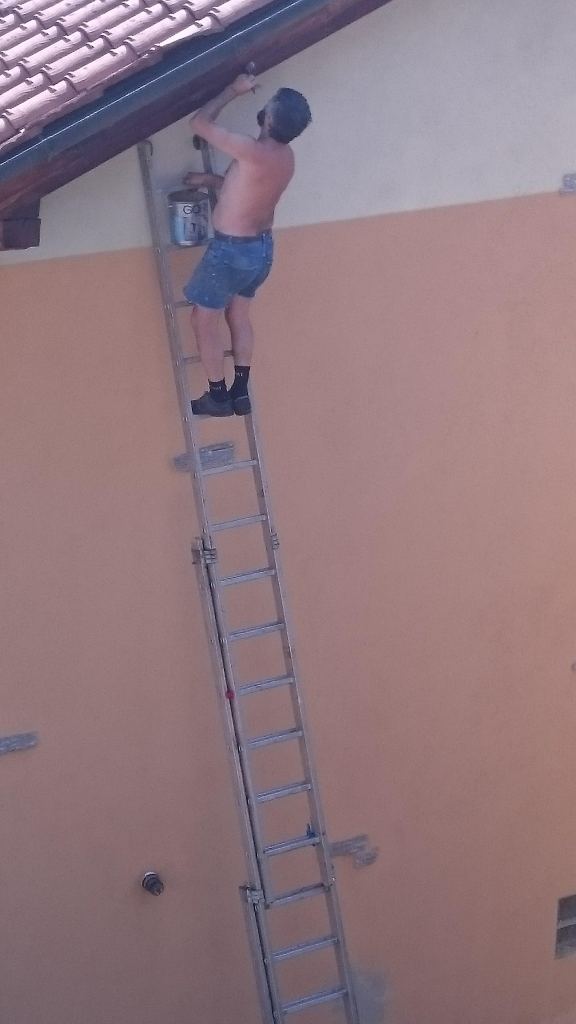
Visiting the DIY superstore proved equally challenging. We stared blankly at the shelves of paint tins, unable to recognise any brand names. We bought a large pot of white emulsion, and the next day, set about painting the kitchen. The thin, watery paint dripped down our arms as we lifted the brush up to the wall. After three coats, the wall was a greyish/white colour with streaks and patches. The paint we had bought was clearly whitewash.
We went back to the shop and asked at the front desk if anyone working in the shop understood English. They told us that Piero spoke very good English and summonsed him over the tannoy. With his piercing green eyes and thick black hair, Piero looked like a movie star. It confirmed my notion that there were certain images of Italians I found incongruous, like working in a DIY shop. The customers seemed out of place as well, strutting down the aisles in their designer jeans and jackets, stylishly loading bags of cement and spirit levels into shopping trolleys. Despite the glowing endorsements from his colleagues, Piero’s English was about as proficient as our Italian. He only knew three English phrases which he recited proudly: ‘Today is Monday’, ‘What is the time’ and ‘Are you happy?’ With the help of Google Translate on his phone, Piero found the paint we needed. We left with two tins of emulsion and a new word to add to our Italian lexicon – antimuffa. Not a political organisation but the Italian word for anti-mould paint.
Lack of language literacy can be a real problem in the context of medical diagnosis and treatment. I found it unsettling going to the doctor, struggling to explain my symptoms, before being handed a piece of paper for medication I’d never heard of, with confusing dosage instructions. Before we lived in Italy, we stayed in a damp mill house near Pisa one April. Our son was ten at the time. He had a cold which turned into a nasty, persistent cough. One morning he woke up with a high temperature, so we went to the nearest Croco Rosso centre. They told us to go home and wait for them. Shortly afterwards, an old Fiat Panda came bounding up to our house. The driver was called Fabbio. With a jagged scar across his Adam’s Apple, hoarse voice and pock-marked skin, he could have walked a film role about the mafioso.
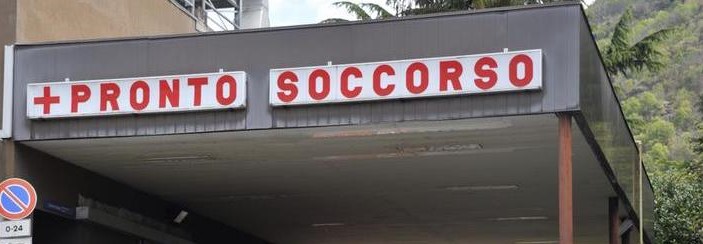
Fabbio squeezed us into his car and took off at about ninety miles an hour, racing down the winding road to Pisa. He deposited us at the entrance of the casualty department at Pisa Hospital. We walked through the sliding doors into the waiting room, where a social gathering appeared to be in full swing. Groups of people standing around, chatting loudly and laughing, – it was hard to tell who the patients were. Everybody was dressed up, including the ones on trolleys, their leather designer shoes poking out the end of the ribbed hospital blanket. There was an elderly Italian woman stretched out on a trolley. Her family were crowded round her bed, shouting at top volume to each other and the A&E doctor. No one noticed when she feebly raised her trembling hand and repeatedly opened her mouth to speak.
A woman doctor (dottoressa) in a white coat called us into a side room and listened to John’s chest. She said it was ‘clean’ and we could go. As we were leaving, I patted my abdomen to indicate that he had a stomach ache as well. The dottoressa jumped up from her desk, ‘Stomach pain,’ she repeated several times. She called one of the nurses, who collected John and left the room with him. The dottoressa didn’t speak English, so couldn’t explain why they were taking our son away. We waited anxiously in the reception area until the dottoressa called us into her office. The nurse brought our son back, accompanied by a radiographer who could speak English. He explained that they had done scans and x-rays of both his chest and stomach and were waiting for the consultant to look at them.
I went out to get a takeaway coffee and as I was returning, I saw the whole family being loaded into an ambulance outside the entrance to the A&E. I dropped my coffee on the pavement and raced to reach the ambulance just as they were closing the doors. Our son was being transferred to the paediatric department on the other side of the hospital grounds. We were led up to the second floor into the Dipartmento Paediatrico (If I had known that all I had to do was add ‘o’ to the end of the English word, I wouldn’t have found Italian so hard!). A startlingly attractive young paediatrician with glowing olive skin and dusky eyes listened to our son’s chest, looked at his x-rays and said he had pneumonia. He was weighed and given a prescription for anti-biotics. Although the care was excellent, our son was given more tests than he needed like the stomach x-rays, because we couldn’t explain the symptoms properly, and the Italian hospital staff wanted to make sure they had covered every possibility.
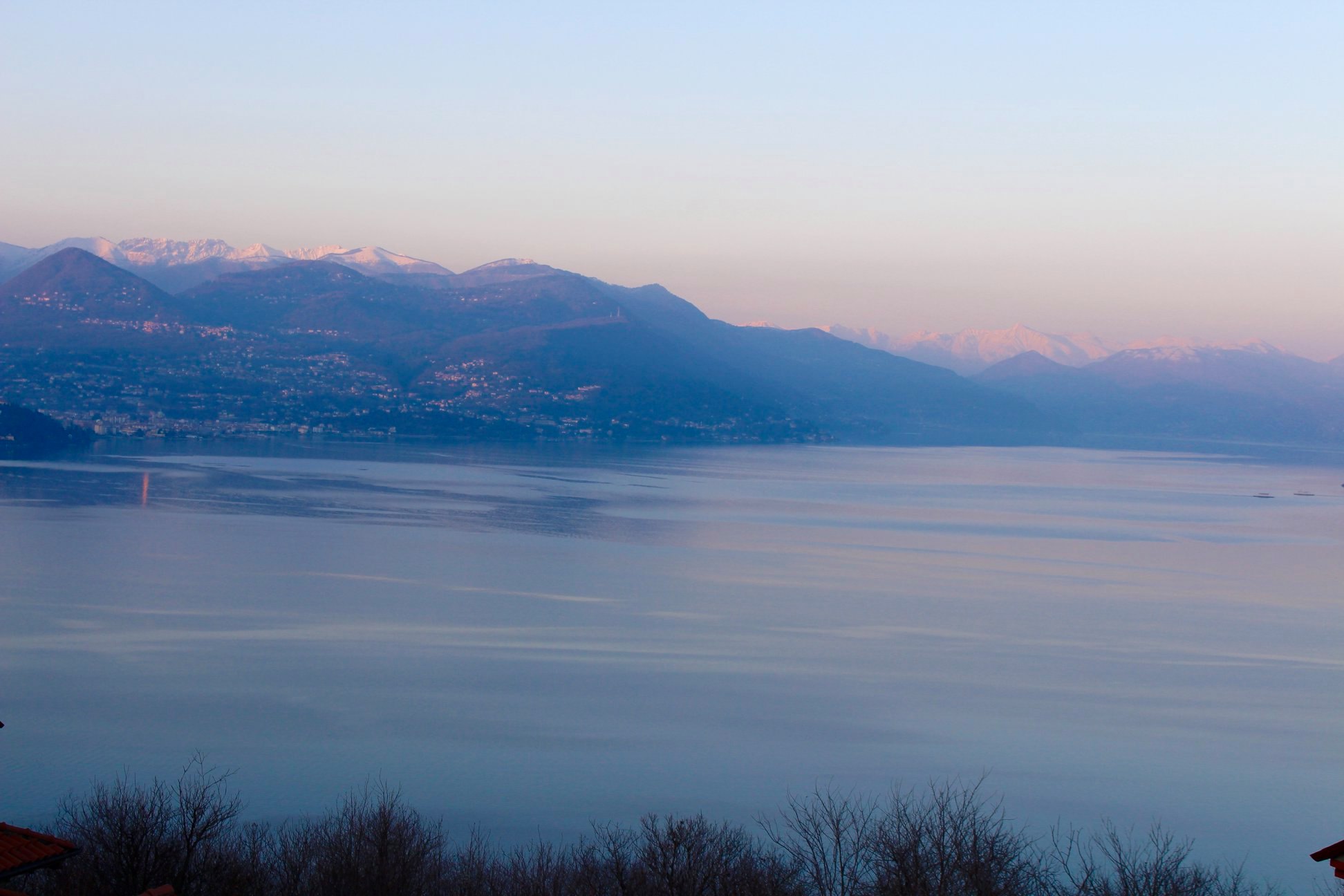
There was a hospital in a town on the other side of the lake from our village. Directly on the waterside, inpatients would have had a view of the lake and mountains from their hospital bed. We walked past it one day and Ian said. ‘When I’m old and about to die, I want to be in this hospital in Omegna looking out at the lake with a nice Italian nurse holding my hand.’
‘I’d rather be in an underfunded, overstretched NHS hospital, lying on a trolley in the corridor waiting hours for a bed.’ I really meant it. I simply could not imagine having a stroke or fall, and in my frailty, unable to understand what was being said to me. Hearing ‘signora, signora, iaburrrburraco spollysignal capi strada burra bing’ as I croaked my last few breaths.
 We went to Italy