
Ticks in May
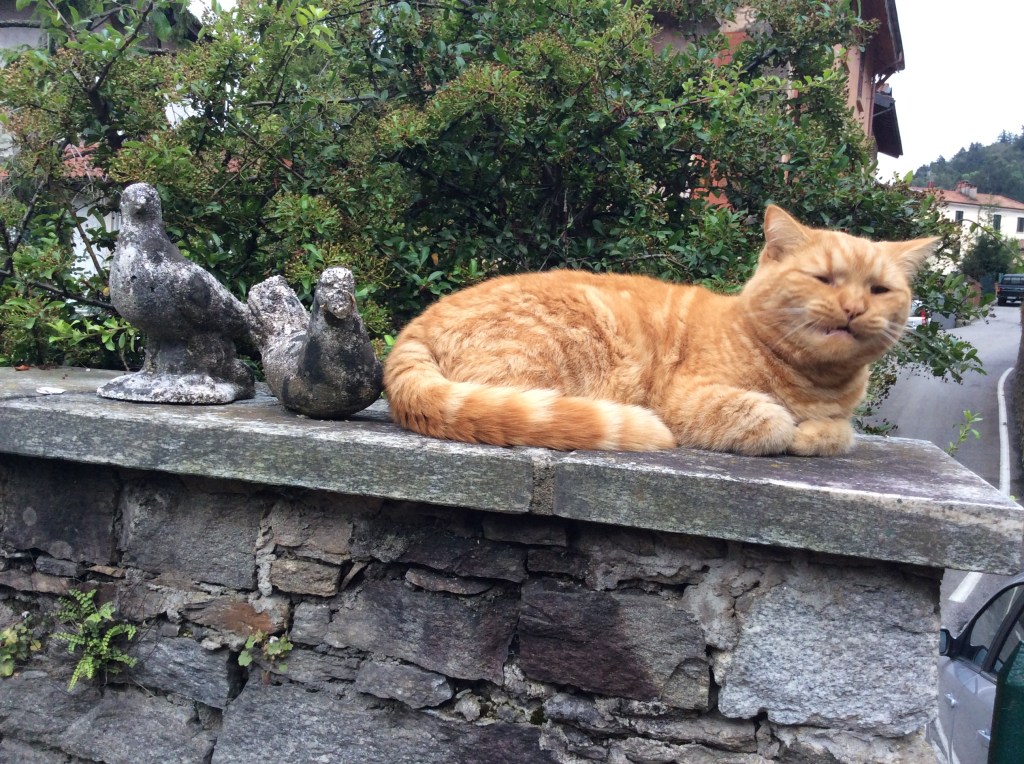
From May to October ticks lurk in the long grass in our garden. One evening after supper, our ginger cat sat on my lap at the kitchen table. He is called Fatty le Ginge, but too embarrassed to ever say his real name, we gave him an imaginative nickname, Ginger. I was stroking his head when I felt a lump on the side of his face. I ran my finger over the swelling thinking it was a small cyst. Ian wandered into the kitchen, peered closely at Ginger and said it was a tick. He found a Christmas cracker magnifying glass in the kitchen drawer and handed it to me. I could see legs writhing on either side of a beige/grey, blood-saturated body. I threw the cat off my lap and ran to wash my hands.
We were surprised a tick had managed to latch onto the cat, because we regularly doused the cats with flea and tick treatment, but this one must have been resistant. We searched the internet for information on how to pull out a tick. Armed with the requisite knowledge, I held Ginger, keeping the side of his face with the latched-on parasite as far away from me as possible, while Ian grabbed hold of the tick with a pair of tweezers and pulled hard. It didn’t budge. He pulled again, sweating with the effort. The tick remained embedded.
We tried several times, then went up the road to fetch Fatlinda, a good-natured Albanian woman in our village, who ironically, is fat. We were told in a conspiratorial whisper by one of our neighbours that Fatlinda weighed 120 kg. Fatlinda has twelve wild cats living in the passage leading up to her front door. She is one of the gattare, women in Italy who look after stray cats. Italy has huge numbers of feral and stray cats (gatti liberi) with around 200,000 being abandoned every year. There is a retired woman in Milan, who spends her monthly pension of €1500 on cat food for 120 stray cats. She and her husband live on an almost starvation diet to save enough money for the animals. Albertina leaves her house at six o’clock every morning, her Fiat loaded with seventy tins of cat food, three kilos of cat biscuits, two litres of milk and fifteen litres of water and drives around the city feeding her cats.
Fatlinda came back to the house with us and lumbered into our kitchen. ‘La tua casa non è pulita,’ she said, pointing to the unwashed dishes in the sink. Which is virtually a crime in Italy. She waved the tweezers away, put her hand behind the cat’s ear, made a sharp, twisting movement and out came the tick. We dropped it into a jam jar of Limoncello, the only alcohol we could find in the house. The internet had instructed us to dump the removed tick in alcohol. We rubbed some limoncello on the cat’s skin where the tick had been.
The next morning, I looked in the bathroom mirror and saw something on my neck. I wasn’t wearing my glasses, but I could see ovular outlines and feel a small lump. I panicked and frantically rubbed limoncello on it. Ian came into the bathroom. ‘I’ve got a TICK,’ I said, frantically pointing to my neck. ‘A TICK. On my NECK. I don’t know how long it’s been there. If it’s been there for twenty-four hours, I’m definitely getting Lyme’s Disease.’ Ian stared at it. ‘That’s a skin tag’.
A few days later, Ian complained about an itchy bite on top of his head. It had been there for a week, but now he felt unwell. He asked me to look at it. I got up from my chair and went to where he was sitting on the sofa. Looming over his head, I saw a boil-like swelling with a necrotic black scab ringed by an angry red rash. ‘Does it look bad?’ Ian asked. ‘Nooo,’ I lied, recoiling from it. ‘But you should get it checked out by the doctor.’ Thanks to my extensive consultation with Dr. Internet, I knew it was more than likely an infected tick bite.
We went to town that afternoon and showed the bite/boil to the pharmacist. She examined it, then shook her head and told Ian to see the doctor as soon as possible. He went to Dottore Ferrari, an energetic man with black hair and thick glasses that made his eyes look large and permanently surprised. He told Ian he didn’t have cancer but a tick bite and sent him away with a course of anti-biotics. Whatever ailment you consulted Dr. Ferrari about, he would always say ‘non è cancro’.
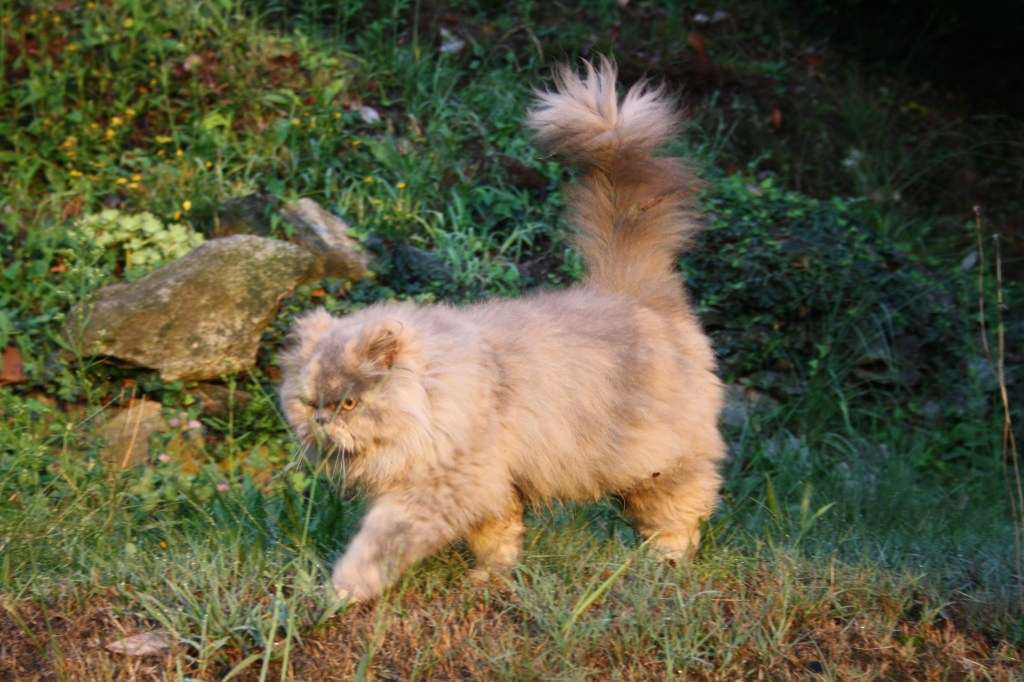
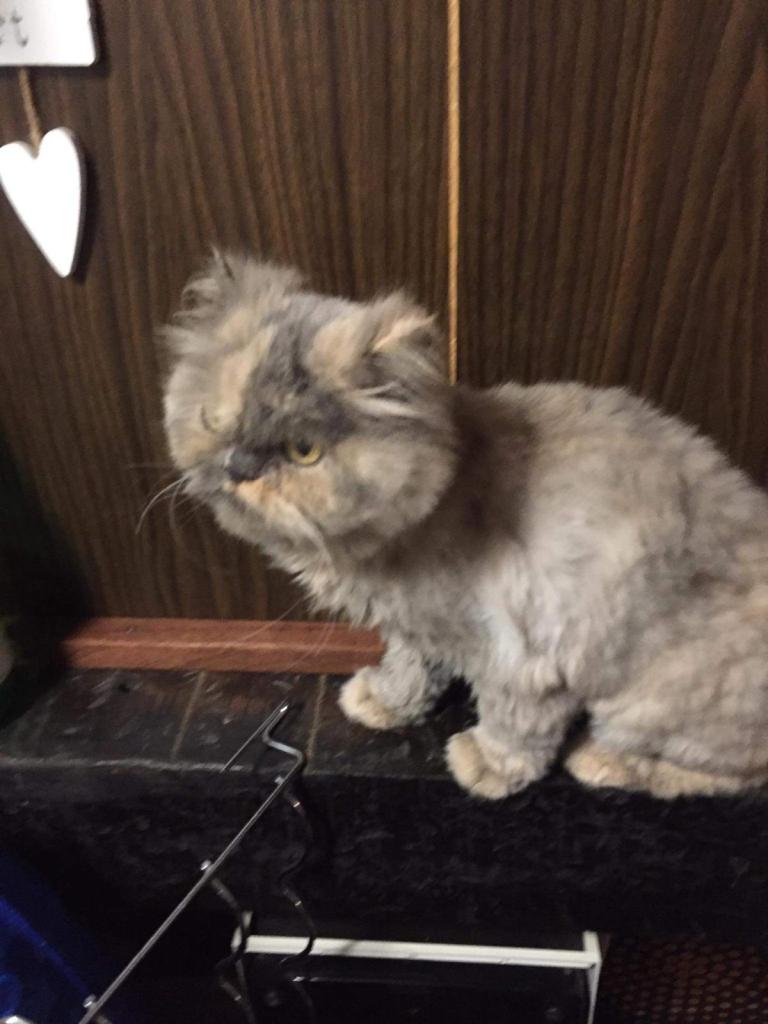
Meschia, our Persian cat, manages to avoid ticks. The main problem is keeping her long hair under control. We should brush her several times a day to prevent her fur from becoming matted, but she viciously scratches us when we try. The fur gathers into large, knotted balls which house every flea in Maggiorgrina and inflame her skin. We had seen a veterinary surgery in a town further up Lago Maggiore and taken the phone number down. We phoned the vet and told him about the problem with Meschia’s fur.
‘Is he a good cat or a bad cat?’ asked the vet, speaking English with a heavy Italian accent.
‘She’s a bad cat,’ said Ian.
‘Ok I give her injection.’
Later that day we drove to the vet. As we approached the door of the surgery, a man in his sixties came out holding a syringe in the air, pumped and ready to go, a drop of liquid pulsing out the top of the needle. Syringe aloft, he went straight past us and charged down the road.
‘It’s a good thing he didn’t trip and plunge the syringe into one of us,’ said Ian, looking at the man running down the road.
I followed Ian’s gaze. ‘Is he the vet, do you think?
It was our turn and we followed the vet into the consulting room. Crammed with antiquated equipment, it looked like a television set from a programme about vets in 1960. There was a machine with an open phial of blood resting on it, from a previous patient/pet. The vet went over to a dresser to get the stuff to sedate Meschia. He opened a drawer with medicines in it, which seemed to have other things in there as well. It reminded me of our drawers at home full of raw plugs, screws, pencils, batteries and old phone chargers. The vet did a thorough shearing job on Meschia. We watched as lumps of grey fur fell to the floor until there was only a few tufts left around her face. Afterwards Ian pulled his wallet out to pay, which surprised the vet. He told us we only had to pay if we wanted or pay some other time like most of his customers.
When we came home, Ginger didn’t recognise Meschia. As she came through the door, his hair went on end like a cartoon cat. Meschia was dozy from her anaesthetic and crawled around the floor in a drunken stupor. Like the time she was tumble-dryed. I had put a pile of clothes in the tumble dryer and was distracted by a phone call. When I came back to the kitchen and turned on the machine, it made a strange thumping noise, a rhythmic thwack on every turn. I wondered if a pair of trainers had been left inside or if it was an electrical fault. I turned the machine off and opened the door. Meschia staggered out. She walked slowly through the kitchen swaying slightly, as though she had taken a swig too many from the gin bottle. She had climbed into the dryer and hidden under the clothes while I was out the room on the phone. She recovered after a few minutes. After that I always checked through the clothes in the dryer before I started the machine.
 We went to Italy