The notary sat at the head of the carved mahogany table surrounded by rose-coloured walls adorned with gilt-framed portraits of the notary’s ancestors, Italian nobility through the generations. A more aesthetically pleasing line-up than the disappearing chins and ruddy cheeks of British aristocracy. Through the open window came the sounds of people talking and high heels tapping across the cobbled stones of the medieval courtyard.
The notary introduced the young woman beside him – the interpreter, dark-eyed, with shoulder-length, silky black hair and fine features. She smiled and extended her hand: ‘Piacere’. Across the table, the owner of the villa pulled his faded red anorak over his large belly and stroked his walrus moustache. His wife, hawkish with an aquiline nose, nodded briefly without smiling.
The contract was read out by the notary – thirty pages of laws, by-laws and binding agreements spoken in slow, careful Italian. The interpreter repeated it all in English. Three hours later, the process was concluded. My husband, Ian, signed the forms before handing me the fountain pen. Given our ancient surroundings, I expected a scroll with a quill. After a moment’s hesitation, I brought the nib down on the paper to sign. The notary picked up a stamp made of inlaid wood. With his manicured hand curled elegantly around the handle, he put the official seal on our impetuous decision to spend virtually every penny we had on an Italian villa with apricot walls and green shutters.
***
Our momentous migration from London to a village in northern Italy began when a white envelope plopped through our letterbox one cold, grey January morning. It was Blue Monday, officially the most depressing day of the year and my fifty-ninth birthday. I picked up the letter from the doormat and saw it was from our bank. Never a missive to look forward to and the message in this one was not particularly welcome. The bank wished to inform us the mortgage term on our London house was ending with a large outstanding balance. If we wanted to keep the house, we had to pay off the remaining amount. The chickens had come home to roost and were nesting in the £140,000 excess that had been accrued because of a worthless endowment policy. Loans had been taken out against the house for holidays in far-flung places in order to make our life less dull than it would have been, had we lived within our means. We couldn’t afford to pay it back, which meant we either had to sell the house or extend the mortgage. We took the latter option.
We went to the bank to arrange the mortgage extension. The young man who took the meeting looked as though he should still be sitting in a classroom doing his GCSE’s. His over-sized suit pooled around his ankles. He flicked his floppy fringe out of his eyes and chewed the end of his ballpoint pen while he scrutinised the paperwork. Looking up, he said ‘Um…’ and made rapid pah, pah, pah, pah noises, which sounded as though he was doing vocal exercises with his lips. Disappearing briefly to consult his line manager, he came back into the room and told us they could extend the mortgage, but the repayments would be astronomical, as the loan would need to be repaid within five years. At our age, the bank could not guarantee we would live long enough to pay their money back if they gave us a lengthy term. When he shook our hands to say goodbye, his polite, condescending smile said: ‘I hope I don’t end up like you two when I’m old.’
We were relieved not to be paying a mortgage into the distant future, but it meant we now had to think about selling the house. There were other changes happening in our lives. Six months previously, Ian had reached the grand old age of sixty-five and retired after forty years teaching music in South London schools. On his last day of work, he came through the front door, his fist raised in a triumphant gesture.
‘It’s over! I’m done! I’m a free man,’ he said. ‘I am totally fucking burnt out. Just burnt out! I have had enough. Boring staff meetings. Having to listen to piles of shit from the education department. Teachers bringing children to my lessons and telling me: “Jack’s got anger management issues today”, then watching him throw his ukulele around my music room. I don’t want to do this anymore.’
‘Is that the speech you’re giving at your retirement party?’ I asked.
I wasn’t ready to retire, but my job as Senior Advisor to refugees and asylum seekers was under threat. The council had made sweeping austerity cuts to our organisation and posts needed to be slashed. I loved the work. Being an immigrant myself from South Africa, some of the experiences of our refugee clients resonated with me. Every day it seemed as though the world came into our office. Our clients brought with them glimpses of distant places – the mountains of Hindu Kush in Afghanistan, great river valleys in the Horn of Africa, Sri Lankan monsoons, red-brown deserts of Ethiopia, tropical forests of the Congo. In the reception area where they waited for appointments, cadences of different languages mingled and blended, as they shared stories about their countries. They carried experiences of war, poverty, trauma, torture and displacement that flowed in tears of fear, anguish and frustration in my office. Together with my colleagues, we helped them navigate precarious lives in their host country, with immigration lawyers to fight their cases, welfare benefit and health advice, therapy groups, food banks and language classes. We ensured they received full entitlement to their rights enshrined in the 1951 Universal Declaration of Human Rights, the 1953 European Convention on Human Rights and the Human Rights Act 1998.
I could have sought alternative funding for my post, but I wanted a fresh start after the council relocated us from a roomy building to a small, depressing prefab on a busy trunk road in Deptford, the main route to Dover. Lorries thundered past, polluting the air and shaking the flimsy fabric of our building. Our clients and their children were crammed into a tiny reception area while they waited for appointments. We had so little room that if you yawned and stretched, you were liable to whack the head of your colleague at the next desk.
Now that retirement was presenting an opportunity for considering our options, we discussed whether we wanted to continue living in London into our dotage. It was hard to imagine not living in London. We had lived our entire married life there and moved into our house in Peckham twenty years earlier with our three young children. Ian was one of the forty percent of Londoners actually born in the capital, although he has never felt any nostalgic connection to it.
I had come to London from South Africa aged twenty-two. I said goodbye to my parents at Johannesburg airport, and landed at Heathrow on a chilly, cloudy morning. I made my way to the tube station, and onto a Piccadilly line train bound for Southgate, where I was staying with a South African friend who lived in London. Nobody in the carriage glanced in my direction. After what seemed like hours, we left the dark underground and emerged from the tunnel into the light. Out the window I could see rows of tiny storybook houses stuck together and patchwork squares of garden. From Southgate station, I walked down the hill to my friend’s house in a street full of other miniature houses that all looked the same. My friend had left the key under the pot plant by the front door. When he and his girlfriend came home after work, they found me in the living room surrounded by my suitcases. ‘Poor little waif’ my friend’s girlfriend said.
I loved London straightaway. I was at home there. Three of my grandparents were born and bred in London and I felt an effortless sense of belonging. Navigating the city from north to south, east to west on an orange bicycle, I skimmed down Highgate Hill, meandered through Hyde Park, pedalled slowly around Covent Garden. The sheer size of London was overwhelming but exhilarating. I loved the cafés, art galleries, architecture and momentum of the city, being swept up in a swathe of Londoners on the move, going down the escalator to the underground, streaming along Oxford Street. I moved from Southgate to live in a road directly off Oxford Street, with a friend of one of my sisters. She was a nurse at University College Hospital and had a rent-controlled flat in a Victorian, red-brick mansion block, with a tiled entrance hall and mahogany banisters on the staircase winding around the lift shaft. The flat had two small bedrooms. An Australian tenant had one and I shared the other one with the nurse. The bath was in the kitchen underneath the table, which you lifted and propped against the wall when you needed a good soak. The total rent was eighteen pounds a week between the three of us.
I met Ian, we married, had kids and for the next twenty years, never thought of living anywhere else. Except once. Our basement flat in Brixton had been burgled twice within a few weeks. In one of the instances, I chased the intruder out. He had knocked on the door, but I didn’t answer because I was heavily pregnant and feeling under the weather, so had taken the day off work. I heard the front door being wrenched open and momentarily wondered why Ian was forcing the door when he had a key. Then it hit me it wasn’t Ian. With an unborn child to protect, the mother lion instinct took over and I charged fearlessly from the bedroom into the hall. The young man standing there froze in shock as this tornado of a pregnant woman hurled herself at him shouting ‘Get out, you bloody bastard’. He took my advice and fled.
When our first child was three months old, a friend offered Ian work in a music editing business on the Isle of Wight. Ian was stressed from his teaching job in a challenging secondary school, and the burglaries had made us jittery, so off we went to live in a rented flat in Ryde, where the ferry from Portsmouth docks. It wasn’t long before we wanted to return to London. We hated the small-minded, island mentality, the unfriendliness of the locals, the empty dull restaurants serving limp coleslaw and tinned turkey. We went to the pub one evening and met a Welsh resident who thumped his fist on the table as he said: ‘The indigenous islander is a complete shit!’ We nearly left after the day Ian had rushed into a shop during his lunch hour to buy a new light bulb for his bike, so he wouldn’t have to ride home in the dark. He picked up the one he wanted and put it on the counter with the exact money.
‘I’m closed for lunch,’ said the shopkeeper in a slow Hampshire drawl.
‘But the shop’s open, and I have the exact change in my hand here,’ said Ian, showing the money in his outstretched palm.
‘I’m closed for lunch,’ the shopkeeper said, picking up his sandwich and eating it.
‘Please, I need this urgently.’ Ian said.
The man stared implacably into the space ahead, chewing. ‘We’re closed.’
What finally drove us back to London was the day we stood in the street watching the annual island carnival. One of the floats drove slowly passed us. In disbelief we stared at the display. Several islanders with blacked-up faces and afro wigs, dressed in grass skirts, were holding wooden spoons as they danced around a large replica of a cooking pot, in which was sitting the ‘missionary’, a white middle-aged man wearing a dog collar and holding a Bible. ‘That’s it. We’re going back to London,’ said Ian as we walked home. We left two weeks later.
We were so glad to be back in London, to be among London people. The experience put us off moving out of London for a long, long time. But in more recent years, we had started to notice physical changes in London that affected our quality of life. Much of our time was spent crawling through ever-increasing heavy traffic or being fined for entering bus lanes and box junctions. Worst of all was the 20-mph speed limit in residential areas. I drove at a snail’s pace one day over Tower Bridge and still received a speeding fine for doing 28-mph.
I had always loved the London skyline, but it was becoming dominated by steel and glass high-rise buildings, as though parts of Dallas or Johannesburg had been dropped on the banks along the Thames. But the worst problem was the noise pollution from the constant roar of jet engines flying overhead on their way to Heathrow. Planes had never flown across London to that extent, but flight paths had been re-routed and Civil Aviation Authority regulations lowered, so that planes were often flying over late at night and early in the morning. Every walk we took in the park was accompanied by the whining hum of planes above us.
We both agreed that, in our retirement years, we wanted to live somewhere where we had more open space and a city which took less energy to navigate. London is a tough city to be an invisible pensioner among the eight million inhabitants. Our elderly neighbour Gladys was fiercely independent. She lived alone in a house with windows choked by dusty overgrown ivy. Hospitalised after a fall, she returned home to find social services had taken over her life. Men in protective white suits came to fumigate Gladys’s home, releasing colonies of rats that ran in lines along the garden walls of our terraced houses. I found a rotund, fuzzy-haired rat in our kitchen gnawing the food in our dog’s bowl. My blood-curdling scream brought Brutus the basset hound racing through the door. He chased the rat into the garden and tackled it. A fierce battle ensued with the rat swinging off the end of one of Brutus’s long ears, its teeth firmly embedded. But Brutus refused to back down and managed to kill the rat, earning my undying gratitude.
Having decided we wanted to leave London, the question we now had to ask ourselves was: ‘Where do we go?’ Would we be able to defy Samuel Johnson’s infamous words that when you are tired of London you are tired of life? We finally agreed that wherever we lived, it should be no more than a couple of hours from London. And that we should find a property with a self-contained flat we could rent out for our retirement income.
We started our search in Kent, the garden of England. After signing up with an estate agent, we viewed a couple of houses, but they didn’t appeal to us. Then we were sent details of Pear Tree Cottage, with its charming yellow clapboard walls and rambling garden with fruit trees. We drove there and found ourselves staring at a small, forlorn house on a busy road, which had been cleverly removed from the photograph. The agent arrived and we went inside to look around, starting with the upstairs. In one bedroom, staring mutely at a computer screen was a teenage boy. ‘Hello,’ we chorused cheerfully. He ignored us. We went back downstairs to the kitchen with its charming Aga stove, red checked curtains and antique pine dresser. In the middle of the table was a bottle of Prozac. We crossed Kent off the list.
Our property search took us to East Sussex. In Brighton, the house prices were as high as London. None of the places we liked fell within our budget. Oxford was even more out of our reach. We wouldn’t be seeing the dreaming spires and timeless antiquity of Oxford University from our living room window. It would more likely be the traffic crawling along the A40. We reached an impasse.
It was a Sunday morning and I had just made breakfast. As we ate our way through a stack of pancakes and maple syrup, we tried to figure out where to live. Ian suggested once we sold the house, we put our worldly belongings in storage and go round the world. Travel to those places in the world we had yet to see, have a proper adventure before we were too old to carry our own luggage onto the plane. There were plenty of places in the world I wanted to visit like Peru, Vietnam, New Zealand, but I not as a nomad without a base. ‘I can’t do that,’ I told him. ‘I can’t travel the world, and not know I have a house that’s always there.’ Having come to Britain as an immigrant, a stable home was vital to me. It was the way I had centred myself and planted roots in Britain. The Germans have a word – heimat – which means home. It can be where you grew up or simply a state of mind. For me, it was about solid bricks and mortar, a house with rooms full of furniture and artefacts safeguarding my memories.
‘One thing is for certain,’ Ian said firmly, as he chased the last of his pancake around the plate. ‘We are not retiring to a seaside resort on the English south coast dragging our aging bodies on Zimmer frames up and down the promenade. That is a cliché I am not going to become.’
I sipped my coffee and winced. ‘Imagine living in one of those places in a cul-de-sac. In a bungalow, with square windows, pebble-dashed walls and a concrete drive. A square foot of lawn with two pot plants for low maintenance. Neighbours who briefly nod at you if you see them in the street. It would be a living death. A slow crushing of your soul.’
Ian got up to help himself to more coffee from the pot on the stove. ‘And then when I do die in my bungalow,’ he said as he came back to the table with his cup. ‘A neighbour who had never spoken to us will say: ‘Ooh, he was a very nice chap. Didn’t suffer fools gladly, mind you.’
I laughed. We were still no nearer to making a decision as to where to live the remainder of our lives.
***
A few weeks after that conversation, Ian came into our bedroom early one morning looking pleased with himself. ‘Look at this, Margs,’ he said, holding his laptop towards me.
‘I’m asleep,’ I grumbled. ‘Go away!’
‘No, go on, have a look.’ He thrust his computer screen closer to my face on the pillow.
I blinked at the image on the screen. ‘It’s a house’.
‘It’s exactly what we’re looking for, with a self-contained flat and everything. My international estate agent sent it.’
I sat up. I was fully awake now. ‘What? Your what?’ I was disconcerted by the revelation Ian had been quietly making a totally different plan from any we had discussed. ‘Where is it? The property?’
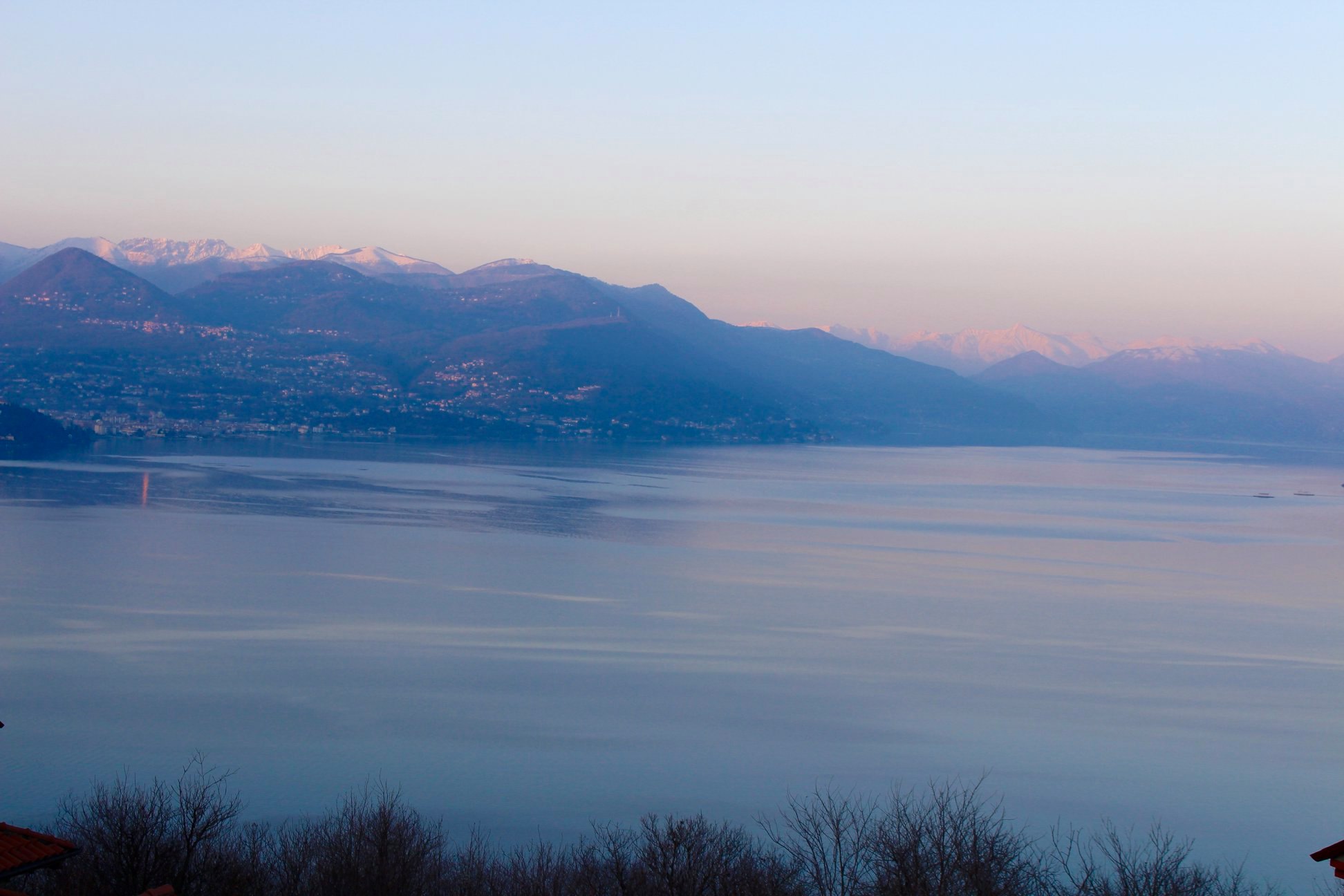
‘It’s on Lake Maggiore, in Italy.’
 We went to Italy
Looking forward to the book 😊♥️
LikeLike
Thanks Mike. Your support is much appreciated.
LikeLike
Very articulate,amusing and descriptive! I look forward to the book!
LikeLike
Thanks Jenny xx
LikeLike
Brilliant! This is a delight!
LikeLike
Thank you !
LikeLike
Wonderfully descriptive – the people, places, linguistic woes – I await further chapters with anticipation!
LikeLike
Thanks Gilly.
LikeLike
Written with such humour and wonderful description; you have drawn me in & I can’t wait to read the book, to find out if all your dreams are fulfilled……!!!
LikeLike
Haha. Thank you Sarah.
LikeLike