Feeling rootless and homesick in my Italian dream exile, I was thrilled when someone called Leslie left a note on our car windscreen to say she and her husband Martin had seen our British number plate and would like to meet us. ‘Yaaay! British people, look, they’re British…BRITISH!’ I handed the note to Ian. ‘THANK GOODNESS!
We met Martin and Leslie for a drink at the circolo in the village. They had retired to Italy to run a bed and breakfast. Leslie was sympathetic to my homesickness, and we shared heart-warming stories of insomnia, indigestion and tinnitus. When Martin finished his drink, he held out his glass and shouted in a jovial voice ‘Mr. Secretario’, to summon Antonio, the barman, to get him another one. Martin boasted how he did not speak a word of Italian. Leslie learnt it in the 1960s from the Reader’s Digest ‘At Home with Italian’ course.
The next day Leslie came to the house and invited us to join them for Sunday lunch. The restaurant where we met was a delightful, family-run taverna hidden in the hills behind our village, unknown to tourists. It was typically rustic with red-checked tablecloths and a small menu of dishes cooked by the mama of the proprietor. Martin clicked his fingers for service and told the waiter that polenta was prison food. He laughed uproariously when he found out we were living on a teacher’s pension, and boasted how the bank in Italy could not believe the amount he put into his account every month. He studied the final lunch bill intently, and then divided it between us to the last centesimo in case we had eaten a morsel of pasta for which we hadn’t paid.
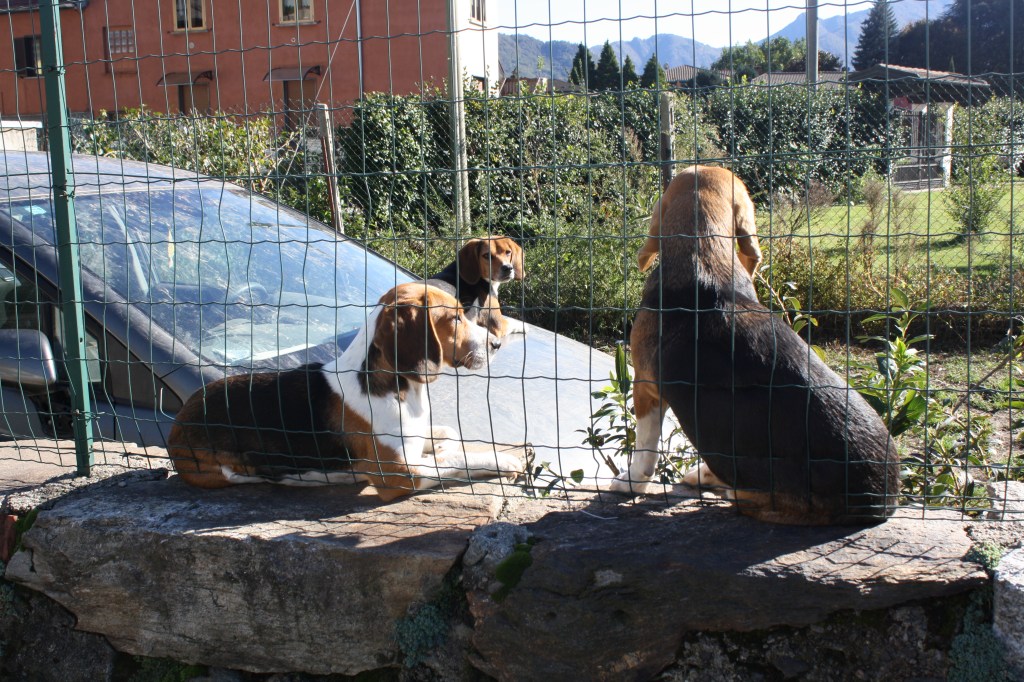
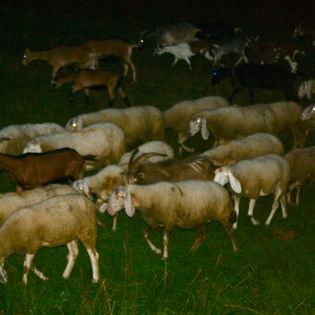
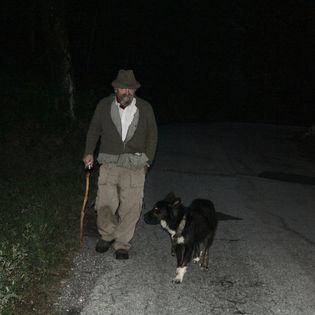
A couple of days later, Leslie appeared at the gate again and invited us for a walk. She had two Beagle dogs with her called Chloe and Pucci. Ian quickly said he had work to do, so couldn’t go walking, but I had no excuse ready. I strolled with Leslie, Chloe and Pucci down the country road behind our house. On our right were the woods, the afternoon sunshine creating dappled patterns on the leaves of the white birch trees. On the left shaggy goats and bony-faced sheep with long ears grazed in the lush green pastures, watched by a shepherd leaning on his crook. ‘Veni qua, veni qua,’ the shepherd yelled at the coarse-haired sheepdogs darting in and out of the animals, nipping at their feet. We stopped to greet him and Leslie chatted to him, her nasal, moany intonation crushing the romance out of the Italian language.
We walked on while Leslie told me the story of her dogs. ‘I love rescuing things,’ she said. Chloe and Pucci had once belonged to a farmer, who left them to fend for themselves on a scrubby piece of land with a few geese and a gigantic pig. Leslie was deeply upset when she saw the filthy and unkempt state of the dogs. One day, she waited for the farmer to come and feed the animals. When he pulled up in his ancient Fiat, Leslie gave him a strong talking-to about the neglect of the dogs, then suggested she adopt them. Leslie took the farmer’s indifferent shrug for assent and bundled the Beagles into her car and back to her house. She named them Chloe and Pucci, and Leslified them. I watched them trotting submissively behind her, their fragranced fur encased in quilted Barbour dog jackets, and wondered if they hankered after their days of unfettered freedom in the farmer’s muddy field.
As we walked along the road, Leslie told me about an English couple who bought a house in the next village, then found themselves in trouble when they couldn’t afford the Italian property taxes. ‘They were teachers, Margot,’ said Leslie, with a knowing look. ‘The wife had to go back to Britain and get a job as a cleaning lady. She was so depressed, she couldn’t stop eating. She had a heart attack and died. It killed her, Margot..… she weighed twenty-five stone when she died.’ I had visions of myself, the poor teacher’s wife, in the kitchen of my lonely villa eating bowl after bowl of pasta followed by mountains of ice cream, hunks of ciabatta showering crumbs on my stained jumper, stuffing my face until the chair I was sitting on broke with my weight.
‘Poor woman.’ I said. ‘We do know about our tax liability. We have an excellent accountant here.’ When I got home later that day, I told Ian we needed to get an accountant as soon as possible.
‘Can you stop tapping that umbrella as you walk Margot. It’s making my tinnitus worse.’ Leslie said testily.
We went through Leslie’s village on the way back and she invited me for a cup of tea. Stabbing aggressively at the teabag with a spoon, she mentioned a news item she saw about refugees coming over in boats to Lampedusa. ‘They’ll overrun Italy the way they have Britain,’ she said. ‘Even the coloured girl reporting said it was a problem.’
We stopped answering Martin and Leslie’s phone calls. Even my desperation to spend time with British people couldn’t dull my senses enough to stomach their company. They turned up at our house one morning and rang the gate bell. Ian glanced out the kitchen window. He flung himself to the ground as though he had been shot. ‘It’s Martin and Leslie,’ he hissed. ‘Get down’. I ducked behind the kitchen counter. Ian crawled along the floor, out the kitchen and past the sitting room windows. When he reached the staircase, he ran up to the tower room and hid.
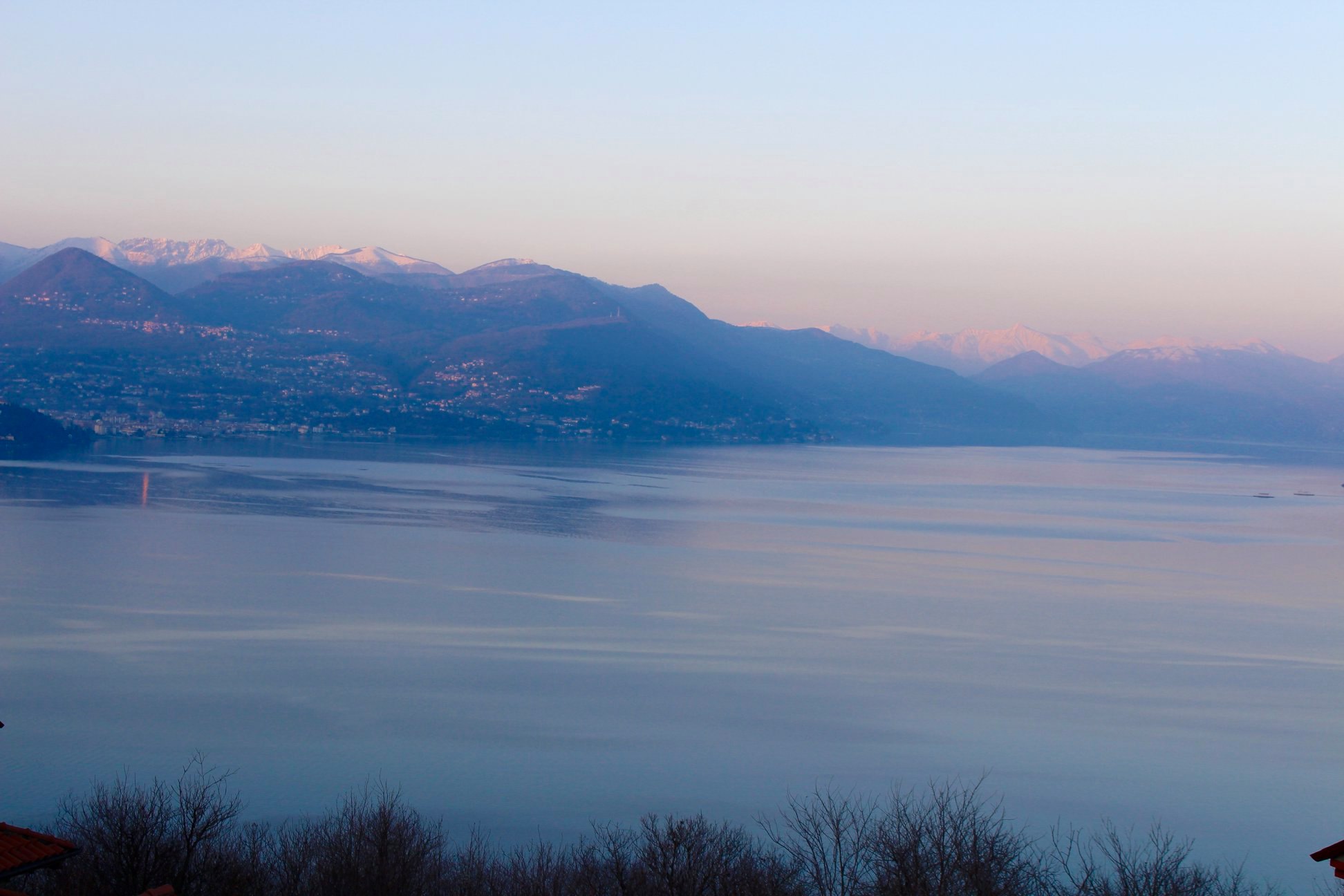
Martin and Leslie did not put me off wanting to meet other British expats. I just needed to find ones with whom I had more in common. We were sitting on a bench by the lake in Stresa when a couple in their forties came down the path towards us, wearing matching striped tee shirts, beige slacks and straw boaters. The dead giveaway was the neat white socks framed in sturdy leather sandals. ‘They’re British.’ I whispered to Ian. We greeted them, and they told us they had a big villa and garden in the hills above Stresa, where they had moved from London to set up a business running yoga retreats.
When we arrived at their villa, we removed our shoes before being led into their sparsely decorated living room. Julian made coffee in the spotless kitchen, while Alice led us out to the verandah, with breath-taking views of the lake and Alps. I had brought a ginger cake, but Alice told me they were gluten-intolerant.
‘Would you like oat, almond or soya milk?’ Julian, as he brought a tray out onto the balcony. ‘We’re dairy intolerant,’ he added. Julian may have been allergic to dairy, but I was alternative-milk intolerant, so I opted for no milk. I took a few sips. It was undoubtedly the worst ‘coffee’ I’d ever tasted. I was certain that no coffee beans had been involved in the production of that dismal, greyish liquid sitting like a watery bog in my cup. When Julian said that they were both allergic to caffeine, I knew it was a coffee substitute. Almost criminal in a country that produces Illy coffee.
Julian passed around a plate of wheat-sugar-dairy-flavour-free biscuits. It was like joylessly biting into bits of gravel. A lucky opportunity presented itself when Alice went to the loo at the same time as Julian disappeared into the kitchen. I only had a moment, so acted quickly. I emptied the contents of my coffee cup into the nearest flowerpot, then slung the biscuits over the verandah railings into a clump of dense bushes, hoping they would be eaten by a squirrel before they were discovered. Alice and Julian did not seem to find their eating habits at odds in a country where everyone smoked, drank heavily caffeinated coffee and guzzled enormous quantities of cheese and cured meat.
After we had been there for an hour, Alice glanced pointedly at her watch. We took our cue and stood up to go. As we were leaving, we invited them round to our house for tea. ‘I’m afraid we can’t do that,’ said Alice. ‘We’re allergic to cats.’ I inwardly sighed with relief.
We may have shared the same passport as Leslie, Martin, Alice and Julian, but we would never have been friends with them in Britain. All four of them supported Brexit, despite the obvious advantages they had enjoyed from being part of the EU. The solution to my homesickness clearly did not lie with all British people.
 We went to Italy
We have the same sort of freaks here, along with the boorish fat bellied old boozers who criticise everything and everybody in Thailand, displaying their bigoted, right wing credentials. But we also have Australians, USAers, Germans, Belgians etc all the same.
There are some exceptions, like Ingo who runs a holiday catamaran here, a young guy from Florida who used to be “trailer trash” – his words – who makes us homemade cookies, and a few more who are a delight to know.
Mostly I keep company with Mam and her many Thai friends – many lovely ladies! And feed my nostalgia with my home cooking – but sadly missing your levels of artistry!
LikeLike
Thank you for the compliment about my cooking. I miss you coming round to eat my cooking. I still can’t believe you are so far away. From your description I’d say there is a certain type of expat that always pops up in places. I didn’t expect to find them in the Italian lakes. Obviously there are good ones like us haha. We did subsequently meet a lovely British guy and we have remained good friends. xxx
LikeLike